Everyday tips for heavy legs: small habits that add up
The most useful things you can do for heavy, tired legs cost nothing: keep moving, avoid standing or sitting still for too long, and raise your legs when you rest. This page turns NHS self-care advice into practical habits for a working day, a long-haul flight or a train journey, a British heatwave and the evening at home. It also says when tips are not enough and you should talk to your GP or pharmacist.
Keep the calf pump working
Walking is the single best habit for your legs, because each step makes the calf muscles squeeze the veins and push blood back towards the heart. The NHS recommends adults do at least 150 minutes of moderate activity a week.
Brisk walking, cycling and swimming are all good choices. Swimming has the added benefit of water pressure on the legs and a cooler environment. If you are not used to exercise, start with short daily walks and build up. Taking the stairs, getting off the bus a stop early or walking during phone calls all count.
At work: standing or sitting
Whether your job keeps you on your feet or at a desk, the key is to break up long periods without movement.
- If you stand all day (shop floor, salon, ward, classroom): shift your weight, walk a few steps whenever you can, do heel raises during quiet moments, and wear comfortable, supportive shoes with a moderate heel.
- If you sit all day: stand up and walk at least every 30 to 60 minutes, do ankle pumps under the desk, and avoid sitting with your legs crossed for long periods.
- Clothing: very tight waistbands or tight socks that leave deep marks are best avoided.
On long journeys
On flights, coach or car journeys of several hours, the NHS advises moving about, doing leg exercises, drinking enough water and limiting alcohol, to lower the risk of DVT.
On a plane, choose an aisle seat if you can, walk up and down when the seatbelt sign is off and do ankle exercises in your seat. In the car, plan a break every couple of hours. If you have had a blood clot before, are pregnant, have recently had surgery or have other risk factors, speak to your GP before a long trip: they may recommend flight stockings or other measures.
In hot weather
Heat widens the veins, so many people find their legs feel heavier during a heatwave or a holiday in the sun. Keeping cool and drinking enough water helps.
Follow general NHS heatwave advice: stay out of the sun at the hottest time of day, keep rooms cool and drink plenty of fluids. A cool (not icy) shower over the legs, starting at the ankles and moving upwards, feels refreshing for many people. Avoid long hot baths, saunas and sunbathing with your legs still for hours.
In the evening and at night
Raising your legs when you rest, ideally above the level of your heart, helps blood flow back from the legs; the NHS suggests lying down with your legs raised on pillows when you can.
Fifteen to twenty minutes with your legs up on a cushion or against a wall after work is a simple routine. Some people find it comfortable to raise the foot of the bed slightly. Regular meals with plenty of fruit, vegetables and fibre, less salt and a healthy weight also help your overall circulation. If you smoke, stopping is one of the best things you can do for your blood vessels: NHS Stop Smoking services can help.
Compression stockings
Compression stockings apply graduated pressure, strongest at the ankle, and are a standard part of NHS care in varicose veins and venous insufficiency. They should be chosen and fitted after a professional assessment.
Your GP can prescribe them on the NHS. They are not suitable for everyone: people with peripheral arterial disease, certain skin conditions or some types of nerve damage may be harmed by them, which is why a check of the circulation is usually done first. If you buy them at a pharmacy, ask the pharmacist to measure you and explain how to put them on.
When tips are not enough
If heavy legs persist despite these habits, or if you notice visible veins, skin changes, sores or swelling, see your GP. Sudden swelling and pain in one leg is an emergency sign: NHS 111 now, or 999 with breathlessness or chest pain.
Our guide on when to see a GP lists the warning signs, and the heavy legs hub explains the common reasons. Some people add a food supplement to their routine; LymphActiv is one, and it is not a treatment. Its authorised claims come from vitamin C, which contributes to normal collagen formation for the normal function of blood vessels, and from vitamins C and E, which contribute to the protection of cells from oxidative stress. See how to take LymphActiv if you want to know how it fits into a daily routine.
Frequently asked questions
Do I need flight socks for a long-haul flight from the UK?
Most healthy travellers do not need them, but they may be advised if you have risk factors for DVT. Ask your GP or pharmacist before you travel, and have them fitted to your size.
Can I buy compression stockings at Boots or another pharmacy?
Yes, many UK pharmacies sell them and some offer measuring. Ask the pharmacist whether they are appropriate for you, as they are not suitable for people with poor arterial circulation. Stronger classes are usually prescribed by a GP after an assessment.
Does drinking more water help heavy legs?
Staying well hydrated is part of NHS advice for hot weather and long journeys, and it is good for your general health. It is not a treatment for any vein condition.
Are massage or leg gels worth trying?
Many people find gentle massage, from ankle to knee, or cooling gels pleasant after a long day. They are comfort measures. If you have lymphoedema, specialist massage techniques should only be done as advised by an NHS lymphoedema service.
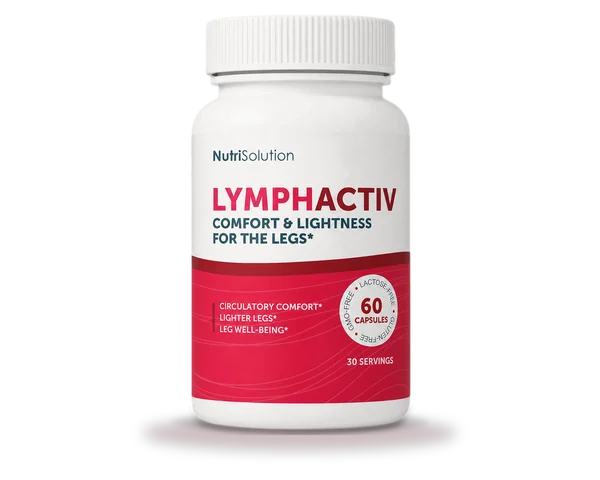
LymphActiv: 7 ingredients, 2 capsules a day
- Red vine leaf (360 mg), dandelion (300 mg), bromelain (200 mg)
- Maritime pine bark (142.5 mg OPC) and horse chestnut (20 mg aescin)
- Vitamin C, which contributes to normal collagen formation for the normal function of blood vessels, and vitamin E
- 180-day money-back guarantee, only through the official order page
Sources
- NHS: Varicose veins (nhs.uk).
- NHS: Swollen ankles, feet and legs (oedema) (nhs.uk).
- NHS: Deep vein thrombosis (DVT), how to reduce your risk (nhs.uk).
- NHS: Physical activity guidelines for adults aged 19 to 64 (nhs.uk).
- NHS: Heatwave: how to cope in hot weather (nhs.uk).
- NHS: Compression stockings (nhs.uk).
- NICE (2013): Varicose veins: diagnosis and management, clinical guideline CG168.